








| Quantity: | |
|---|---|


Children's Play Equipment Manufacturer Explains the Classifications of Play Equipment
When it comes to play equipment, many people feel confused. With so many types of play equipment available, what exactly are the differences? How are play equipment classified? For example, there are numerous play equipment in parks or attractions. How can we thoroughly understand the types of play equipment? Based on where the equipment is placed, there are two main categories: indoor play equipment and outdoor play equipment. Indoor equipment primarily includes play structures like naughty castles and arcade centers. Outdoor play equipment generally consists of large-scale installations, such as mechanical, inflatable, water-based, and electric equipment.
The manufacturer explains that inflatable play equipment mainly includes inflatable bounce houses, inflatable slides, inflatable climbing walls, and inflatable pools. Water-based play equipment primarily consists of frame pools, water floats, and water slides. Electric play equipment mainly includes bumper cars, inflatable electric ride-ons, and electric bungee trampolines. Mechanical play equipment comes in many varieties. Based on the type of play, they can be categorized as follows:
Carousel horses: simple carousels, deluxe carousels, foldable carousels, coin-operated carousels, etc.
Rotating rides: rotating airplanes, lift-and-drop airplanes, auto-controlled airplanes, ocean walkers, giant jellyfish rides, etc.
Track rides: mini trains, space shuttles, micro shuttles, slide dragons, etc.
Tower rides: flying chairs, samba balloons, frog jumps, etc.
Aerial sightseeing rides: aerial sightseeing cars, sun-drilling mice, etc.
Pirate ship rides: pirate ships, crescent moon floaters, disco turntables, etc.
The manufacturer also explains water-based rides, such as shark island combos, amphibious vehicles, and carp leaping through the dragon gate. Although there are hundreds of types of play equipment, the fundamental ways of playing have not changed, regardless of how the appearance evolves. The classification above should help you clearly understand the names and distinctions of various equipment. In the future, when you visit a playground, you will no longer be unsure about what type of play equipment you are enjoying.
Design Elements for Sand, Stone, and Soil-Based Children’s Play Facilities
While square sandpits are common, circular, oval, or freeform curved sandpits are more popular among children. The border edges of sandpits should be raised between 100mm and 200mm above ground level, allowing children to step in and out easily without tripping. It is important to consider the proportion of users to the sandpit area to avoid overcrowding. Supporting facilities for sandpits, such as nearby water faucets and seating heights, should ensure convenience for both children and parents. The edges of sandpits can be decorated with colorful ceramic tiles or mosaics, or materials with textures different from sand, providing children with varied tactile experiences during play.
Creating varying terrain levels in sand play areas can make the space more dynamic and engaging. Activities like sand paddling on steeper slopes are particularly appealing to older children. Utilizing sloped terrain to install sand-water transfer devices can also add significant fun to sand play activities. Warning signs should be placed to indicate hazardous areas. Additionally, outdoor natural or artificial sand play areas should provide shading and multiple drinking water stations to prevent dehydration and heatstroke in children during hot weather.
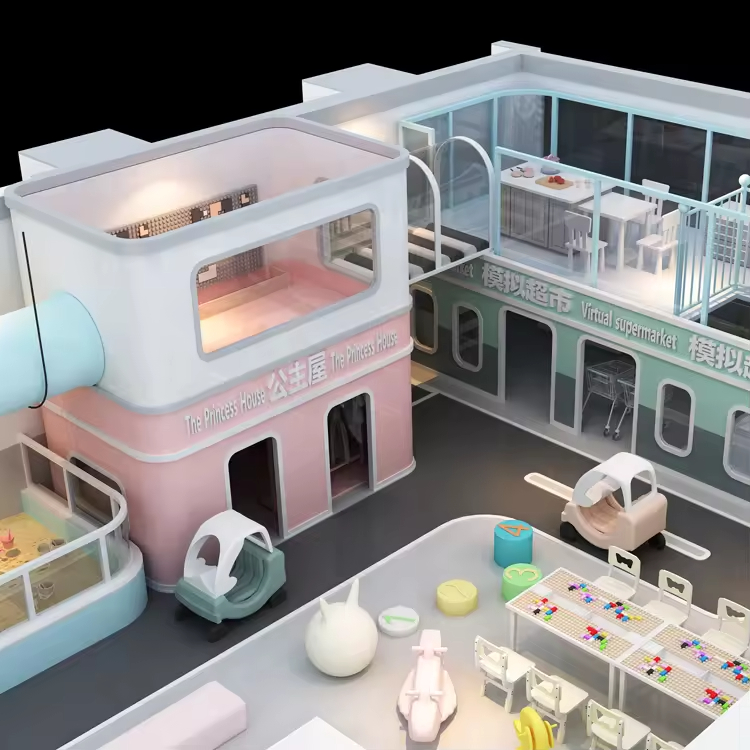
| Park Positioning: | Kids indoor playground,Indoor Trampoline Park,Shopping Mall,Amusement Park,commercial etc. |
| Space Size: | Customized size |
| Attractions: | Big Slide, Donut Slide, Slam Dunk, Velcro Wall, Tap Fun, Spider Tower, Foam Pit, Free Jump, High Jump, Battle Beam, Ball Pool, Climbing Zone, etc. |
| Target group: | Kids,Teenagers, adults |
| Design service: | Park equipment 3D design + interior design |
| Installation: | 1. Installed by yourselves, we can supply you full detailed installation map, reference project picture and videos. 2. Installed by our engineers(paid service) Please contact us directly if you want to get more details. |
| Age: | Young Children's Area: 3-7 years old, Middle Children's Area: 7-10 years old, Older Children's Area: 10-14 years old. |
| Certification: | Our trampoline park and indoor playground with the highest quality materials to ensure we meet or exceed all North American and European standards, includingASTM, TUV, and so on. |
| How to order: | We provided one - stop customized service. We can design as per your requirement. Contact us to get a Customized design. |
Our indoor playground strictly complies with international safety standards including EN1176, ASTM F 1918, ASTM F 1487, ASTM F 2970, and GB/T 34272, ensuring that every play experience is both joyful and safe. We consistently prioritize quality and safety above all, continuously delivering premium products and attentive services to our valued customers.

|
|
|
ISO9000 Quality Management System In 2005, we passed the ISO 9000:2000 quality management system test and received its certification. | SEDEX Milltyland Amusement is SEDEX 4-Pillar certified, covering Health& Safety,Working Conditions, Environment, and Business Ethics. | CSEI Milltyland Amusement has obtained China's special equipment production license. |
|
|
|
TUV Rheinland All of our soft play products comply withthe TUV Rheinland EN1176 safety standard. | SGS We work closely with SGS to ensure all materials pass the SGS Govmark flammability and fire test. | ASTM Our products comply with both ASTM F1918-12 and ASTM F2970-17 safety standards. |
|
|  |
CE Our products are well certified to meet CE requirements for the world market. | UL Our products comply with UL’s safety standards for the North America market. | IAAPA Member Since 2002 As a IAAPA member since 2002, we dedicate all of our efforts to providing the safest and most innovative products. |


